What are piles?
Piles, also called hemorrhoids or मूळव्याध, are swollen blood vessels inside or around the back passage (anus). Everyone has these vessels. They become a problem when they swell, bleed or slip down. Piles are very common. Straining in the toilet, long-standing constipation, sitting for long hours, heavy lifting, pregnancy and a low-fibre diet can all make them worse.
Common signs
- Bright red blood on the stool or in the toilet
- A soft lump that comes out while passing stool
- Itching, burning or discomfort near the anus
- Pain, especially if a lump gets swollen or clotted
- A feeling that the bowel has not fully emptied
Bleeding from the back passage can also have other causes. Please do not assume it is piles. Get it checked.
The four grades of piles
Doctors describe internal piles in four grades. This helps decide the treatment.
- Grade 1: Piles stay inside. There may be bleeding but no lump comes out.
- Grade 2: A lump comes out while passing stool and goes back on its own.
- Grade 3: The lump comes out and has to be pushed back with a finger.
- Grade 4: The lump stays outside and cannot be pushed back.
When are medicines enough?
Many patients with grade 1 and some with grade 2 piles feel better without an operation. The surgeon may advise more fibre and water, a stool softener, sitz bath (sitting in warm water), and medicines for bleeding and pain. For suitable patients, Ayurvedic treatment options are also available. If symptoms keep coming back, or the piles are grade 3 or 4, a procedure may be advised.
What is laser treatment for piles?
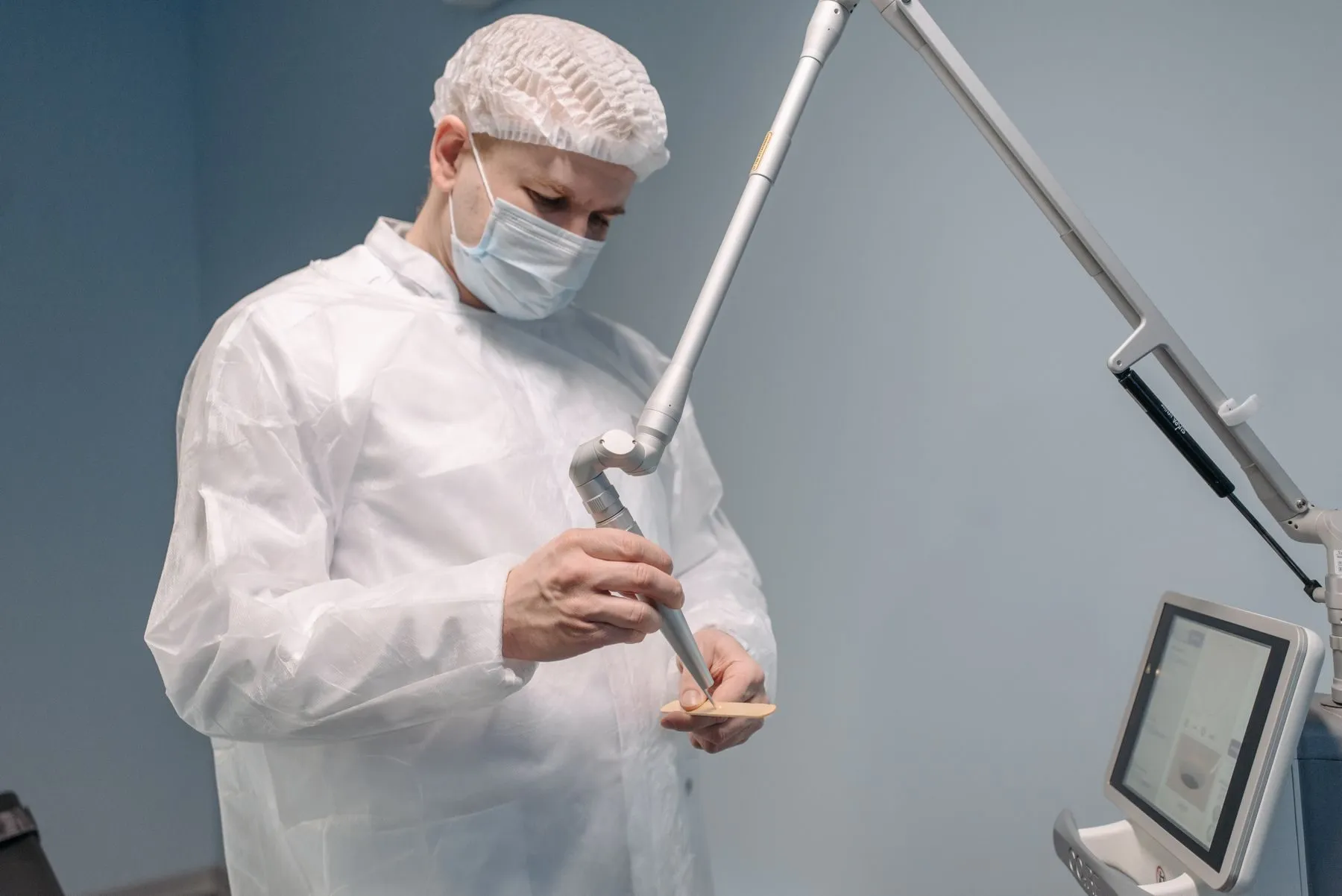
In laser hemorrhoidoplasty, the surgeon uses a thin laser fibre to deliver controlled heat inside the swollen pile. This shrinks the pile from inside. There is usually no large open wound and no stitches. It is done under anaesthesia, so you do not feel the procedure itself. Our hospital offers stitch-less laser operations for all types of piles, but the right method for you depends on your examination.
Possible benefits compared with open surgery
For many patients, laser treatment means less pain, minimal bleeding and faster healing than conventional open surgery. Most patients return to their daily routine in a day or two. The procedure is precise, so the risk to the sphincter (the muscle that controls the bowel) is low. Every patient is different, and results vary.
Recovery after laser treatment
Most patients go home the same day or the next day. Some soreness is normal for a few days. You will be given medicines, a diet plan and sitz bath advice. Eat high-fibre food, drink plenty of water and avoid straining. Come for your follow-up visit so the surgeon can check healing. Piles can return if constipation continues, so lifestyle changes matter.
Talk to our surgeon
If you have bleeding, a lump or pain near the anus, see a surgeon early. Early piles are easier to manage. Call or WhatsApp 7769961919 to book a check-up at our Eet hospital or Patoda branch.
Advantages of treatment
- Stitch-less laser procedure for suitable patients
- Less pain and minimal bleeding than open surgery
- Most patients resume daily routine in a day or two
- Low risk to the bowel-control muscle
- Cashless treatment with major insurers
- Female nursing staff for women patients